Ku K'aay
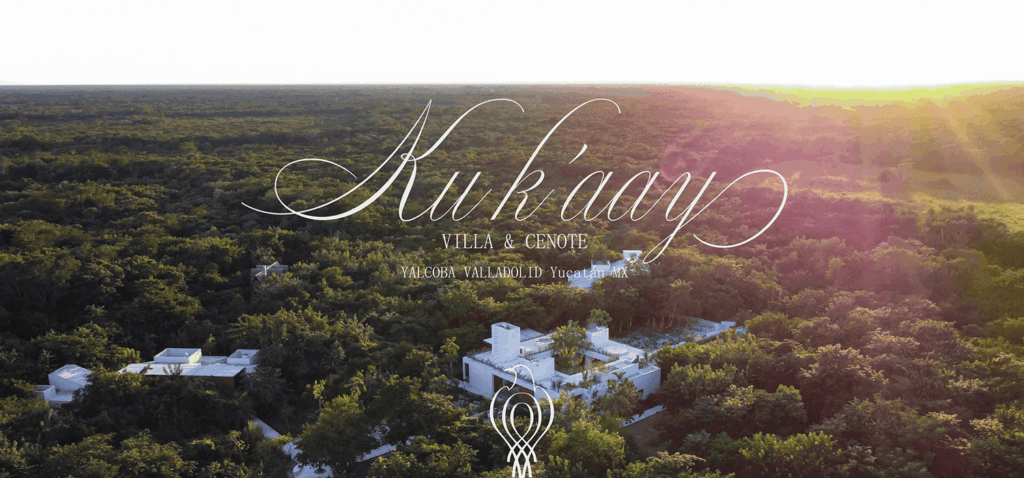
As creative director of the Ku K'aay project, a luxury villa in Yucatán, Rodrigo led a comprehensive approach to architectural design and experience creation. His work encompassed everything from initial conceptualization to overseeing all aspects of the design, assembling a multidisciplinary team. The goal: to fuse modern luxury with Mayan heritage into an immersive experience that harmonizes with the jungle, prioritizing sustainability and cultural respect across the 10-hectare estate.
Rodrigo conceived the initial architectural concept that guided the Reyes Rios Larrain architecture firm in developing the design. The vision focused on seamless integration with the landscape, incorporating two private cenotes. The project included elements such as organic gardens, over 1.5 km of winding walkways, a chicken coop, and meditation areas. The selection of materials combined traditional Chukum stucco with modern sustainable practices. The resulting architecture creates comfortable spaces that maintain a strong connection with the surrounding jungle, innovating in sustainable luxury design.
The project also encompassed the curation of the complete guest experience, including the development of Ku K'aay's branding. Multisensory experiences were emphasized, from authentic Yucatecan cuisine to wellness offerings in natural settings. Lighting design was crucial, especially in the cenote cave, creating immersive atmospheres. As a finishing touch, Rodrigo designed several unique elements, including furniture pieces, decorative objects, and artwork, ensuring that every detail reflected the project's holistic vision and set new standards in luxury ecotourism and experiential design.
Cancun Column
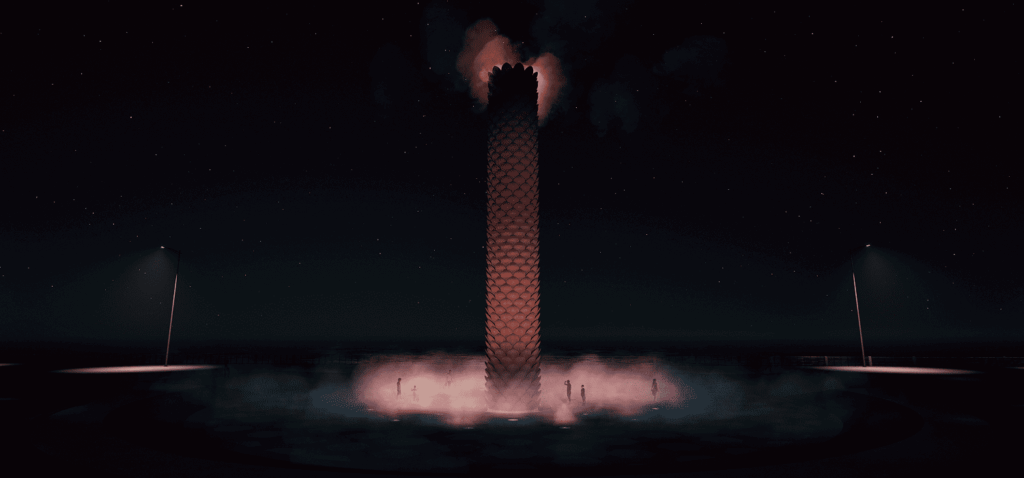
The 25-meter-tall Cancun Column redefines the city's urban landmarks with its innovative, scale-inspired design. This cylindrical structure integrates various water features and dynamic lighting. By day, it offers a refreshing respite; by night, a captivating light show. Its 30-meter interactive base completes the experience, creating a multisensory space. The Column embodies the spirit of Cancun and its connection to water, merging art, technology, and public space for locals and tourists alike, serving as a hub for community cohesion and urban renewal.
The design employs a modular system with a single prefabricated component for the exterior, structure, and stairs. It is assembled by stacking circular layers rotated 45 degrees and secured by tension rods. Dual internal helical staircases facilitate maintenance. Channels between the scales distribute water in a controlled manner. Interactive misters are located at the base and top. This innovation ensures efficient construction, simple maintenance, and an enriched experience, merging functionality and aesthetics into an icon that expands the boundaries of architecture.
Cancun Park
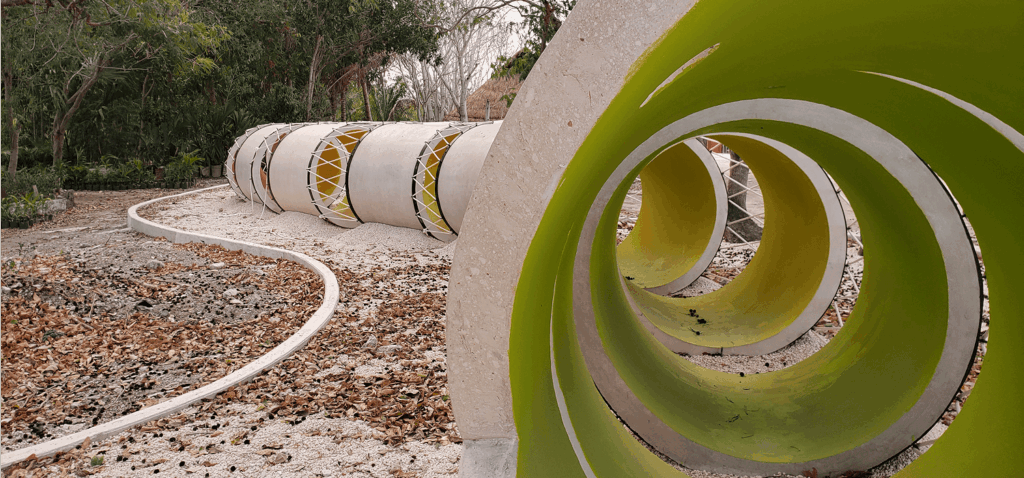
The design of the playground at Parque Cancún blends sculpture with interactive play structures. The design prioritizes sustainable materials such as concrete, wood, and rope, avoiding plastics in favor of eco-friendly options. Its climbable sculptures encourage physical exploration and imaginative play for various ages. This design aligns with the park's conservationist ethos, providing a unique and captivating play experience. The project achieves a balance between artistic expression, functionality, and sustainability, resulting in a visually striking and deeply interactive play space.
Bestiario

Bestiary is a constantly evolving collection of aluminum sculptures. It reinvents animal forms with a modern style, drawing inspiration from origami and paper toys. It challenges the boundary between art and functional design. Each piece merges precise technology with artistic vision, balancing form, function, and expression. The collection employs innovative metalworking techniques, creating weld-free sculptures that evoke the delicacy of paper while maintaining the strength of aluminum. Thus, Bestiary achieves a combination of visual lightness and material durability.
Bestiario stands out for its innovative metal folding technique. Its aluminum sculptures achieve a paper-like delicacy without sacrificing strength. Inspired by origami, the pieces are formed without welding through precise folding and assembly. This method creates intricate and lightweight animals, fusing artistic beauty and technical prowess. Bestiario thus expands the boundaries of metal sculpture, uniting visual fragility with structural solidity.
Cardboard Bear
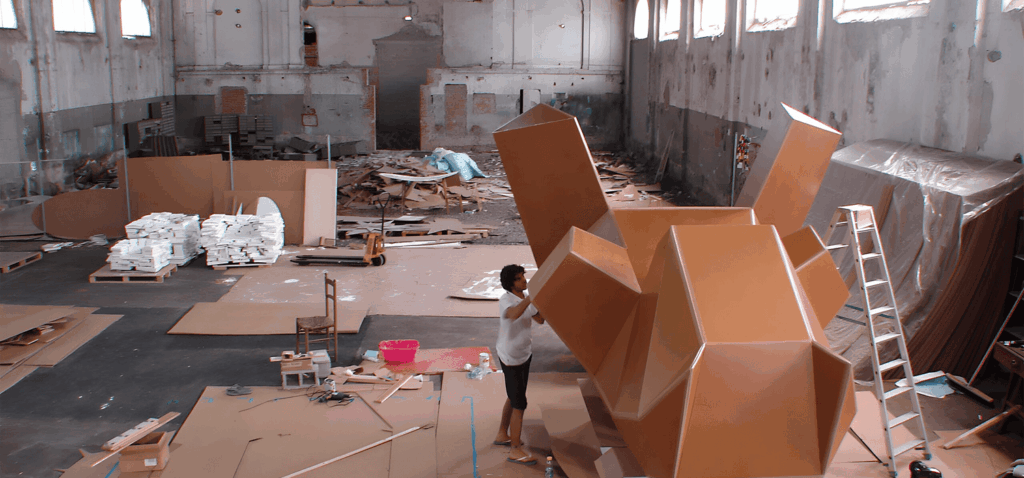
For LUBICA (Lucca Biennale Cartasia), a foldable teddy bear toy inspired a 4-meter-tall cardboard sculpture. This project explored the convergence of product design and architectural scale, challenging perceptions of cardboard as an artistic medium. The bear, displayed outdoors in Lucca, Italy, demonstrated the innovative use of cardboard in monumental art. By magnifying a toy to architectural dimensions, the work exemplified LUBICA's mission to push boundaries in paper-based art, honoring Lucca's papermaking tradition.
Carpet Hippo
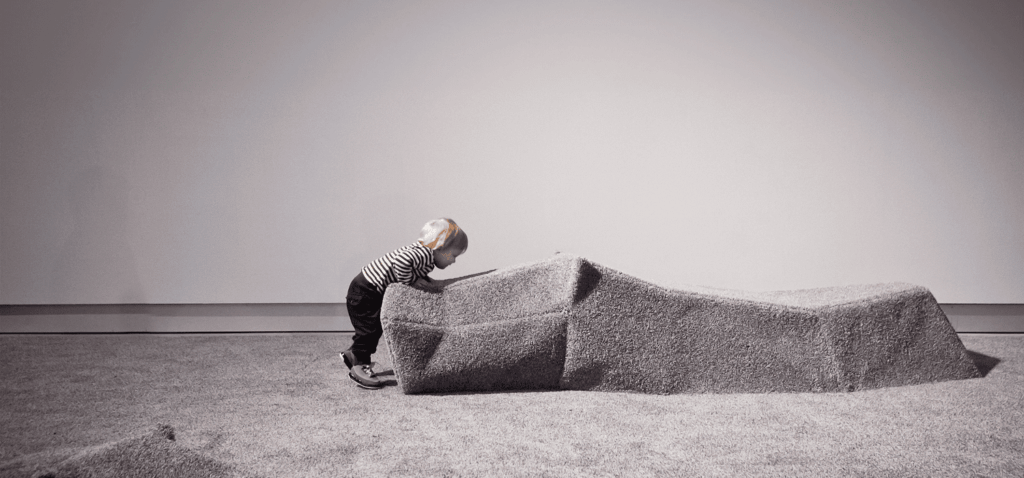
For the exhibition “The Pop-Up Generation” at MOTI, an immersive carpet installation was created in collaboration with the Dutch company Desso. Sculptures of hippos emerge from a soft, “aquatic” carpet surface, blurring the boundaries between 2D and 3D. This child-friendly design invites physical interaction while challenging perceptions of dimensionality, in line with the exhibition’s theme.
Dar Sabra
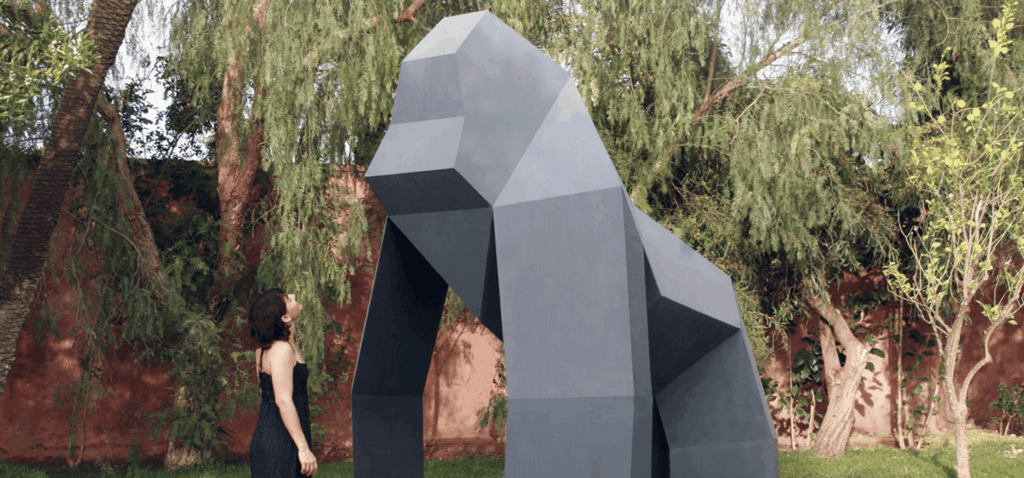
This 3-meter-tall steel gorilla, commissioned by the Dar Sabra Hotel in Marrakech, marks a milestone in Rodrigo's sculptural design. Evolving from paper toys, the work maintains its playful essence on a monumental scale. The sculpture symbolizes the transition to large-format metal art, fusing a playful spirit with an imposing presence. This piece exemplifies how complex folding principles are adapted to durable materials, achieving a unique synthesis between the playful and the architectural in a luxurious setting.
Stainless
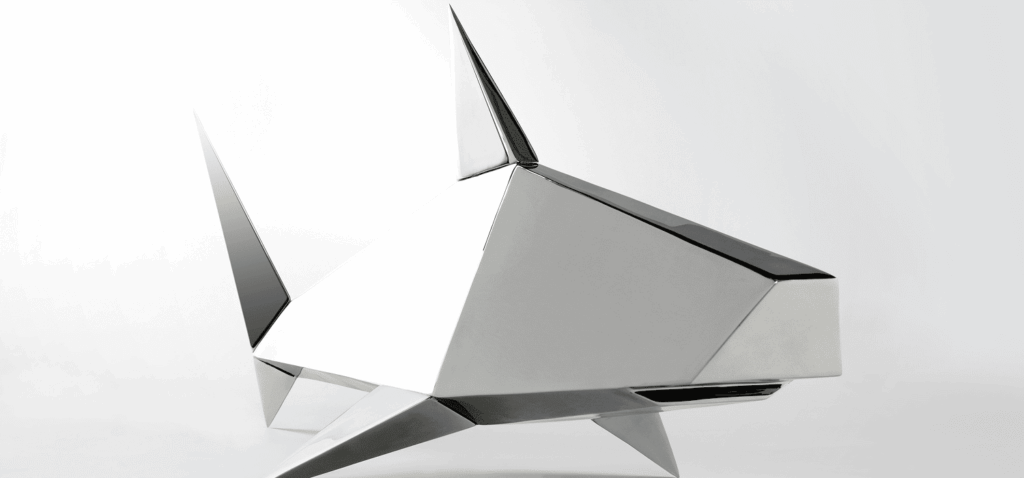
This shark sculpture represents a significant step in Rodrigo's career, marking his transition from paper toys to metal works. The piece captures the dynamic form of the shark in metal, demonstrating the artist's newfound skill in metallurgy. Its selection for auction by Pierre Bergé & Associés underscores the importance of this work in the artist's evolution.
Calendar
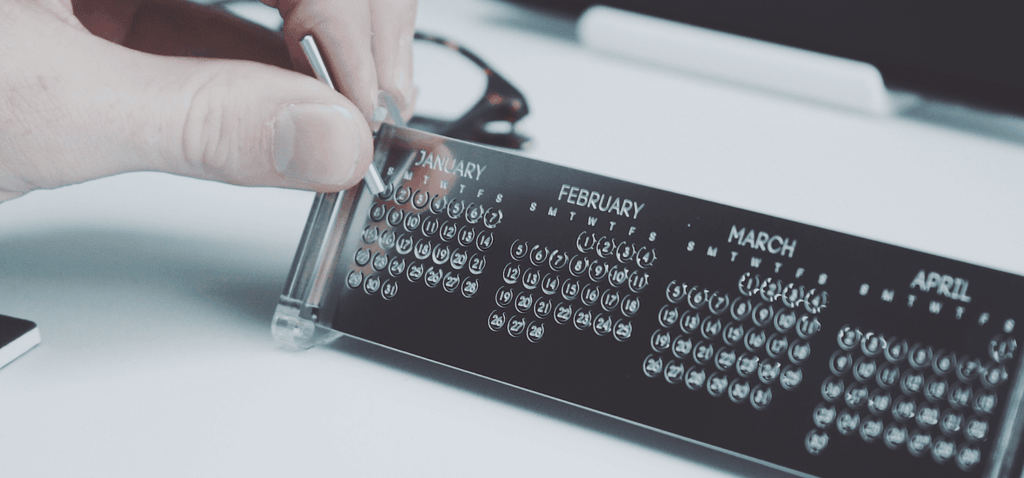
The 365 Calendar, a collaboration with Matthew White, presents a completely new approach to the traditional calendar. Using the same metal engraving techniques employed in the Poligon sculptures, it allows you to permanently mark each day by pushing tabs as time passes. The user records dates in a delightful way and can mark upcoming events such as birthdays or holidays.
The project comes in two formats: the Folding Calendar, which arrives flat and transforms into a triangular shape, and the fully assembled Magnetic Calendar. Throughout the year, the calendar becomes something deeply personal, fusing traditional folding techniques with industrial precision to create a unique experience.
Polygon
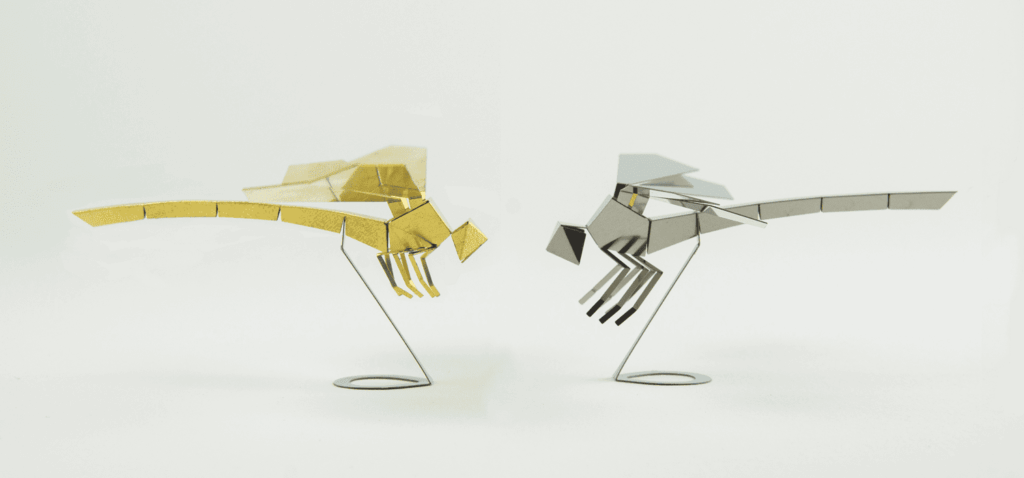
Poligon, a collaboration with Matthew White, transforms the user into a sculptor, turning flat metal sheets into 3D animals. Using photochemical etching, an ancient technique refined for precision, foldable patterns are created. Users shape simplified yet recognizable animals—penguins, gorillas, whales—using fold lines and pre-installed magnets. This tool-free process unites artistic vision with industrial precision. Poligon collaborated with Elephant Family and was exhibited in stores such as Paul Smith and The Conran Shop in the UK, merging art, technology, and conservation.
Expanding on the concept, intricate insect sculptures were developed. These miniatures, etched onto thin metal sheets, condense each design into a single, flat pattern. Unlike the larger animals, Poligon Insects require no additional components for assembly. Users transform these two-dimensional etchings into three-dimensional sculptures through precise folds, creating an accessible and meditative crafting experience. These tiny works showcase the versatility of photo-etching and offer an introduction to the art of metal folding.
Gino
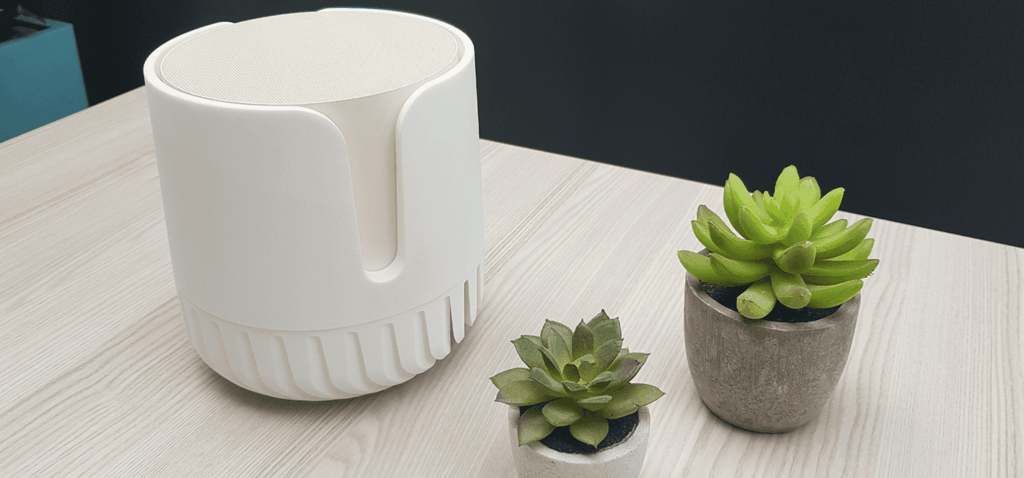
Gino, designed for Smart Separations, revolutionizes personal air purification by merging advanced technology with sculptural elegance. This filtration system incorporates powerful nanotechnology that silently eliminates 99.99991% of microbes. Its versatile design allows it to be placed in a variety of environments—from desks to dining tables and cars—creating a 360° sphere of clean air. Compact and USB-powered, Gino seamlessly integrates cutting-edge functionality with everyday aesthetics. It redefines air purifiers, presenting itself not only as an effective sanitizer but also as an attractive companion for healthier living spaces.
Distortion
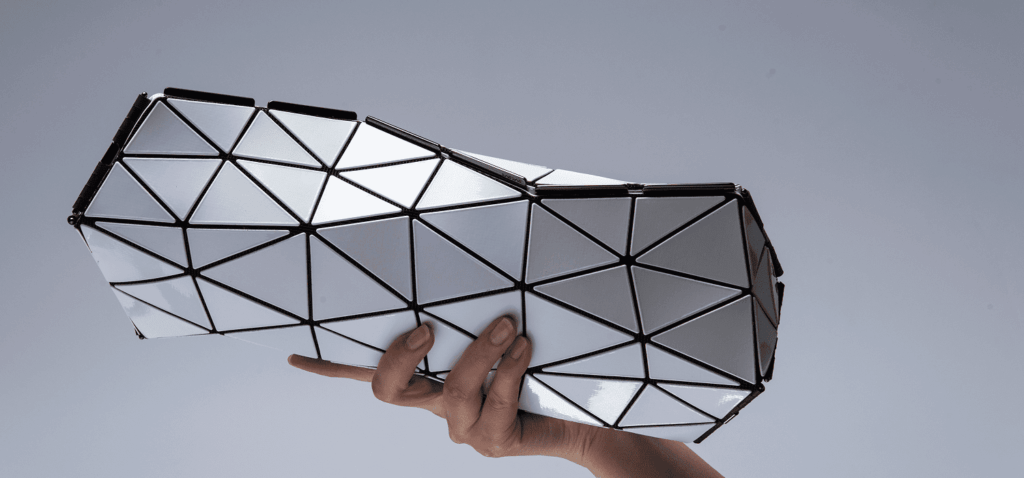
Distortion, an innovative user-assembled bag, was designed in collaboration with BAO BAO ISSEY MIYAKE. Inspired by origami, the accessory is delivered flat and takes its final shape through user interaction. This unique approach creates an interactive experience, engaging owners in the bag's creation. The design combines traditional paper-folding techniques with digital fabrication, resulting in a secure yet easily assembled structure. Distortion represents a fusion of fashion, function, and user participation, pushing the boundaries of accessory design.
RoZie
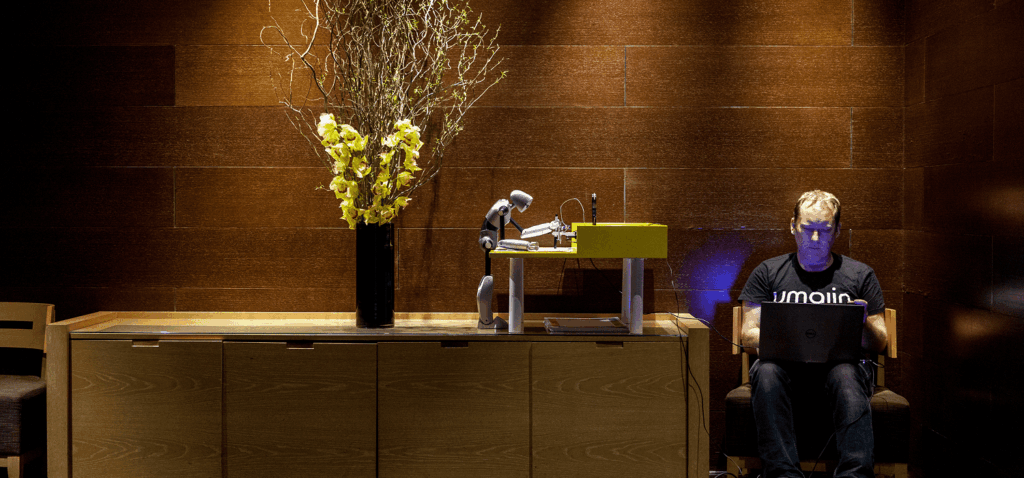
RoZie, a facial scanning and drawing robot, was designed for WPP BrandZ's 100 Brands event at the Houses of Parliament. Developed in collaboration with Umajin and Matthew White, RoZie's physical structure and mechanical components were engineered to create an interactive installation. The robot captivated attendees by scanning faces and producing instant portraits on paper. RoZie seamlessly blended technology and art, showcasing cutting-edge robotics in a historic setting.
Orishiki
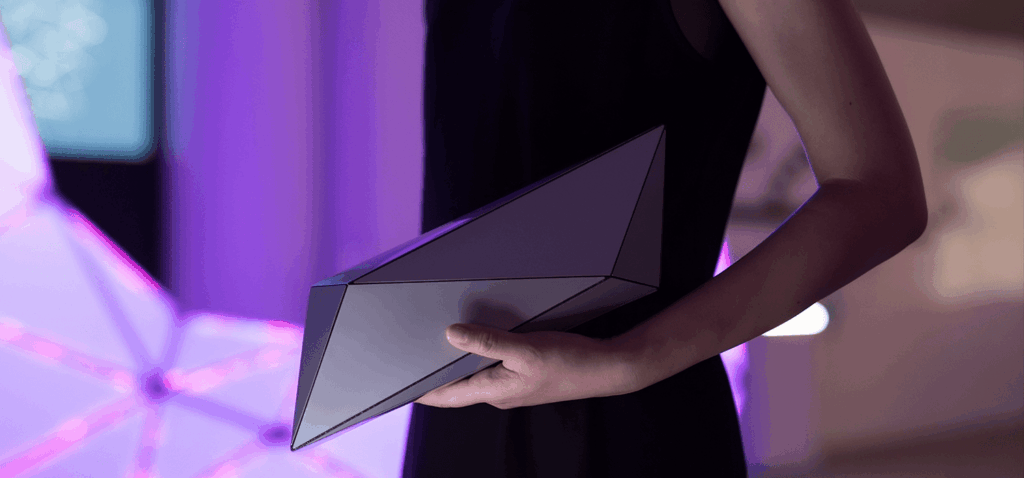
ORISHIKI, created by N&R Foldings with Naoki Kawamoto, ingeniously merges origami and furoshiki, the Japanese art of wrapping objects. This innovative bag transforms from a flat piece into a three-dimensional structure, secured by magnets. Its development required complex optimization of structural strength, production efficiency, capacity, and aesthetics. Crafted from materials ranging from traditional to cutting-edge, ORISHIKI embodies the synergy between Japanese cultural practices and modern engineering. This project demonstrates the ability to simplify complex concepts into functional and visually appealing designs, uniting ancient tradition with technological innovation.
Toy Folder
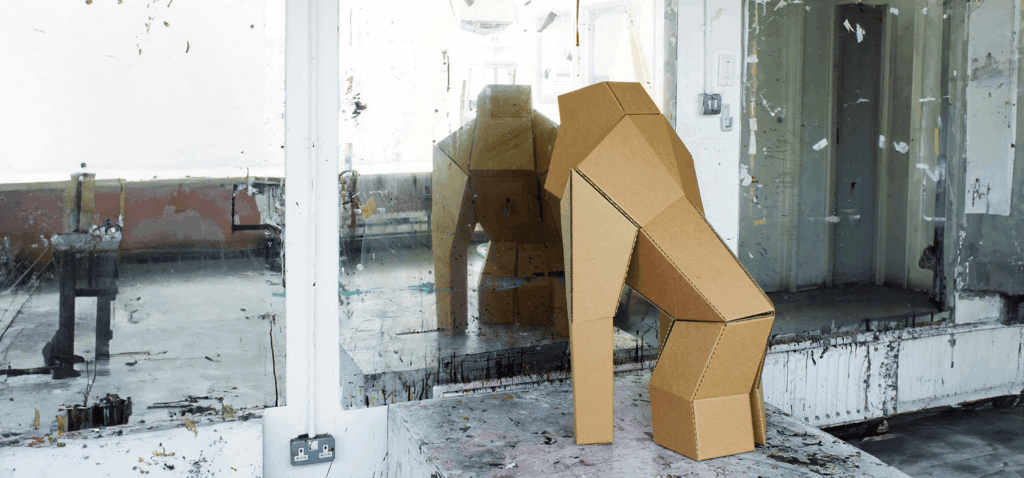
Toy Folder introduces an innovative approach to toy making, utilizing repurposed materials and a DIY projector system. The design incorporates scalable pattern slides, enabling the production of customizable toys. This system encourages parent-child interaction, enhances fine motor skills, and promotes sustainability awareness. By transforming waste materials into creative resources, Toy Folder fosters ingenuity and environmental consciousness. The project reinvents toy production as an interactive and educational process, combining innovation with eco-conscious design principles to create a unique family experience centered on creative play and learning.